A lot of Americans, when they get sick, will want little more than some simple chicken soup to feel a bit better. And while I do appreciate a good chicken noodle or the slightly-more-involved matzoh ball soup, my comfort food is my Dad’s homemade curry.

Not just any curry, but what’s called curry rice in Japan. And, of course, not just any curry rice, but Papa’s beef curry rice…which we used to cook together when I was a wee Scout, long before I learned that he made his far better than any curry shop in all of Japan!
For a good amount of time, I was also a vegetarian, and Papa would kindly make me vegetarian* curry rice whenever he made the meaty kind for the rest of the family. This also instilled a belief in me that Japanese curry was chock-a-block full of carrots and potatoes, but it is sadly not so. These days, it seems that every curry I stumble across here, whether tasty or not, has only a couple~few pieces of meat in it, and comes with a free game of “find the vegetables”.
And don’t even get me started on moving to Japan and trying a tonkatsu other than my Dad’s for the first time!
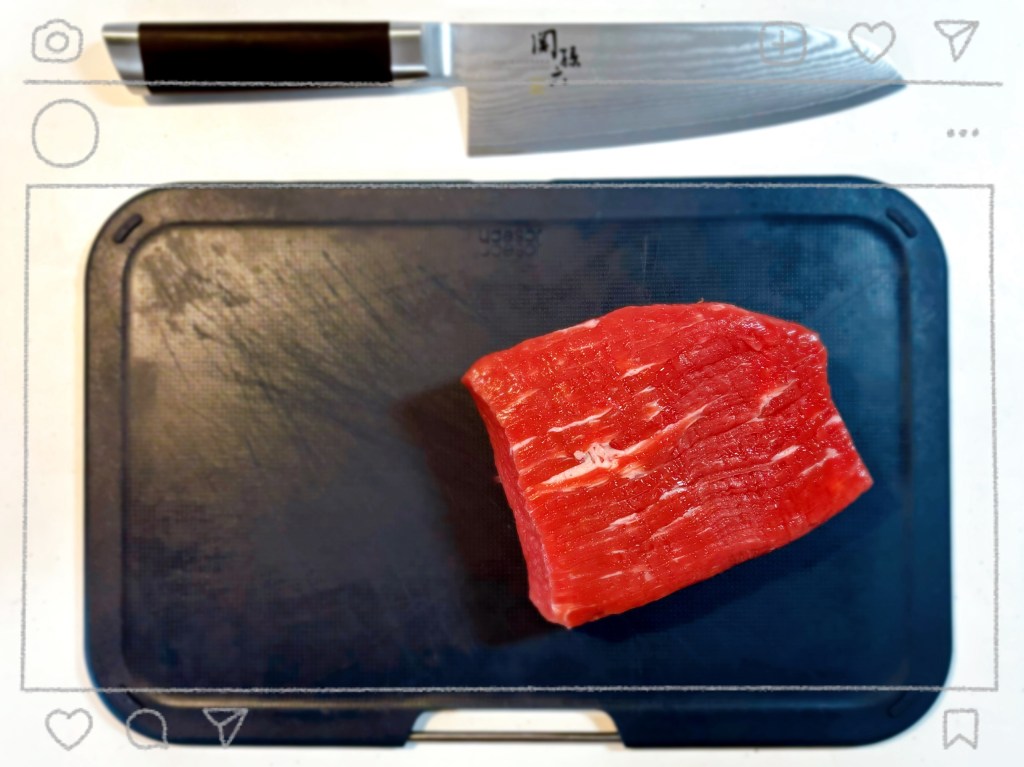
For this recipe, you must start with either stew beef or a nice cut of loin. This is a labor of love, mind you, so you need a few hours to let it simmer good and proper, as you want the beef to be fork tender and to just start falling apart when it’s time to eat. And while my Dad is largely responsible for me becoming a fancified professional chef, he first instilled in me a love of cooking simple yet comforting food, so this recipe doesn’t require any expertise; it simply requires time. It’s a great weekend dish, which you can leave to cook while you watch a movie or do other things.
So, with no further ado, I will attempt to give you a recipe for my version of a dish which I always make by feel…and I’m going to write the recipe with the ratio of vegetables and meat that I like in curry rice, but feel free to adjust to your tastes. It’s a very forgiving dish.
PAPA’S BEEF CURRY
- 250 grams of stew beef or beef loin, chopped into bite-sized chunks
- 1 large onion, chopped
- 2 medium carrots, chopped
- 2 medium potatoes, chopped
- 2 Tbs. tomato paste
- somewhere around 1 to 1.5 liters of water
- 4 beef bouillon cubes
- 1/2 to 1 box of Japanese curry roux (pick yr own level of spiciness!)
- salt and pepper
- cooked rice, for serving (I’ll leave the rice recipe up to you, if that’s all right.)
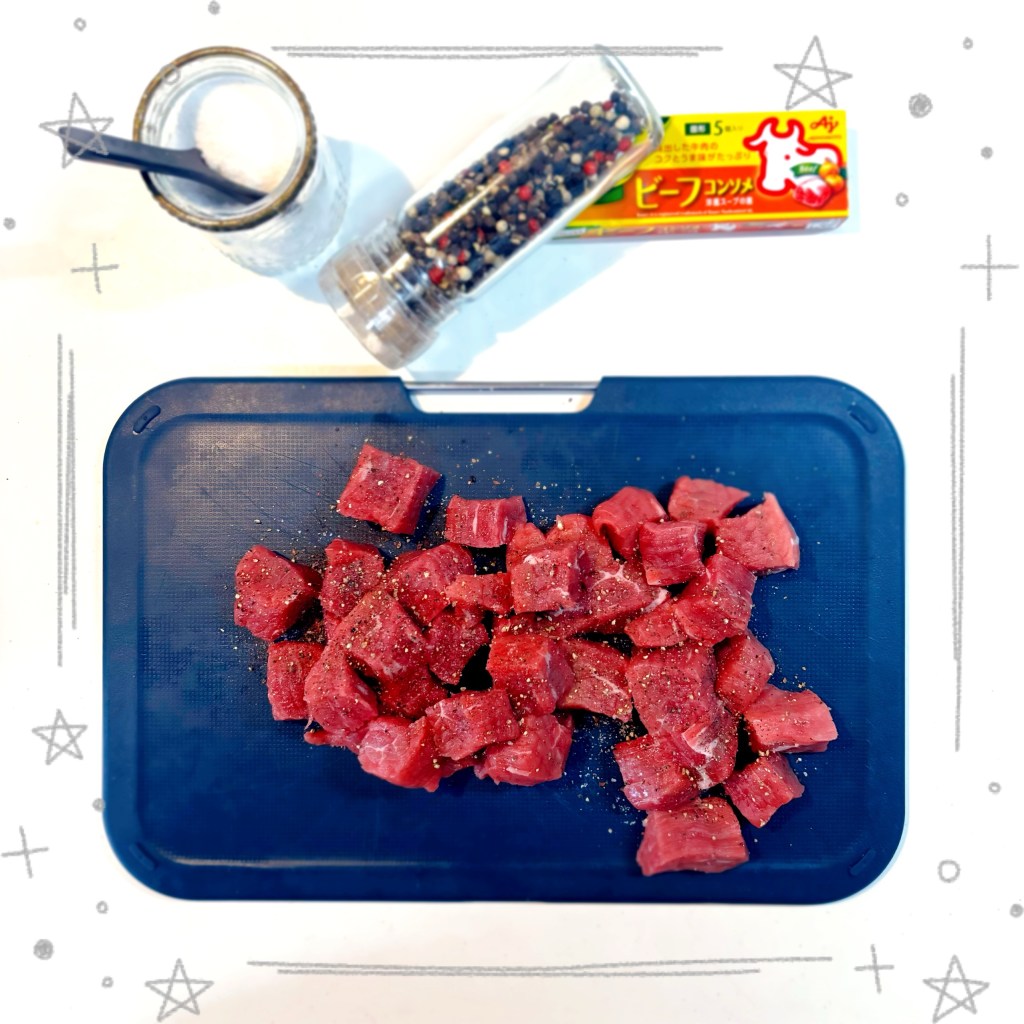
1. To begin with, you will need a large pot. How large? A good rule of thumb is to look at the amount of stuff you need to fling into said pot, and at least double the size. But I used a 5-liter stock pot.
Cut your beef into chunks—I like mine a little bigger than about half of an inch. However, remember that the bigger you cut the meat pieces, the nicer and chunkier the curry will be…but the longer it will take to cook.
Sprinkle salt and pepper over the beef, wash yr damned hands, and then turn on your pot, adding just enough oil to cover the bottom of the pan…more or less.
2. Over medium high heat, sautée the beef in batches, keeping just enough oil in the pan for the meat not to stick. When you make something like a stew—and that’s basically what this is…just don’t tell anyone—recipes will often say, “Don’t crowd the pan”. This simply means to leave some space between your chunks of meat, as well as the sides of the pot. Here, I even took a picture!

3. Sautée all of the beef in two or three batches, removing the pieces to a plate when they are nicely browned. Leave the heat on.
4. Return all of the browned beef to the pot now, and then add the tomato paste, stirring to coat evenly, and cook about one minute until everything begins to look a bit dry.

5. With the heat still on, pour about three to four times as much water into the pot as you have meat. I know this amount is imprecise, but that’s the way it goes. I usually fill up my tea kettle to boil the water while I’m sautéing the beef, and then just dump that in, but sometimes it isn’t quite enough, and I need to add more. ¯\_(ツ)_/¯
Tip: it’s better to add a bit too much water at the beginning of cooking, and cook it down or ladle some out at the end than to have to add extra water at the end, as that will dilute the flavor.
❤︎
6. Wing your bullion cubes into the pot—these will also add some depth of flavor to the finished recipe—and stir gently over medium heat until it just begins to simmer. If you add hot water, this step will go faster.
7. When the beef-cube-infused water begins to simmer, reduce the heat to low, cover it, and stir occasionally. Now is a good time to chop your carrots, potatoes, and onions (if you haven’t done so already). Generally speaking, you want pieces of vegetables roughly the same size as your chunks of meat. It not only looks nicer this way, but everything cooks more evenly.
8. You can begin poking at the beef for its level of doneness after an hour or so, but this really depends upon not only the size and the shape of your pot, but also how low your “low” heat is. You’re looking for the meat to be about halfway cooked before you add the vegetables, or else they will get overcooked by the time the beef is done.
Tip: at this stage, the beef should be just soft enough to bite through, tho not quite tender enough for a stew, and it will feel a bit dry in your mouth.
❤︎
9. Return the heat to medium high, and then carefully add all of your vegetables to the pot. Stir everything together, and continue stirring slowly until the broth begins to boil, then reduce the heat to a low simmer.
Do you need to cover the pot again? If more than a small amount of your water has cooked away while the beef was simmering, I recommend putting the lid back on your pot so that the end result isn’t too thick. If almost none of your water has evaporated, leave the lid off to help it cook down somewhat. Either way, stir occasionally until everything is done.
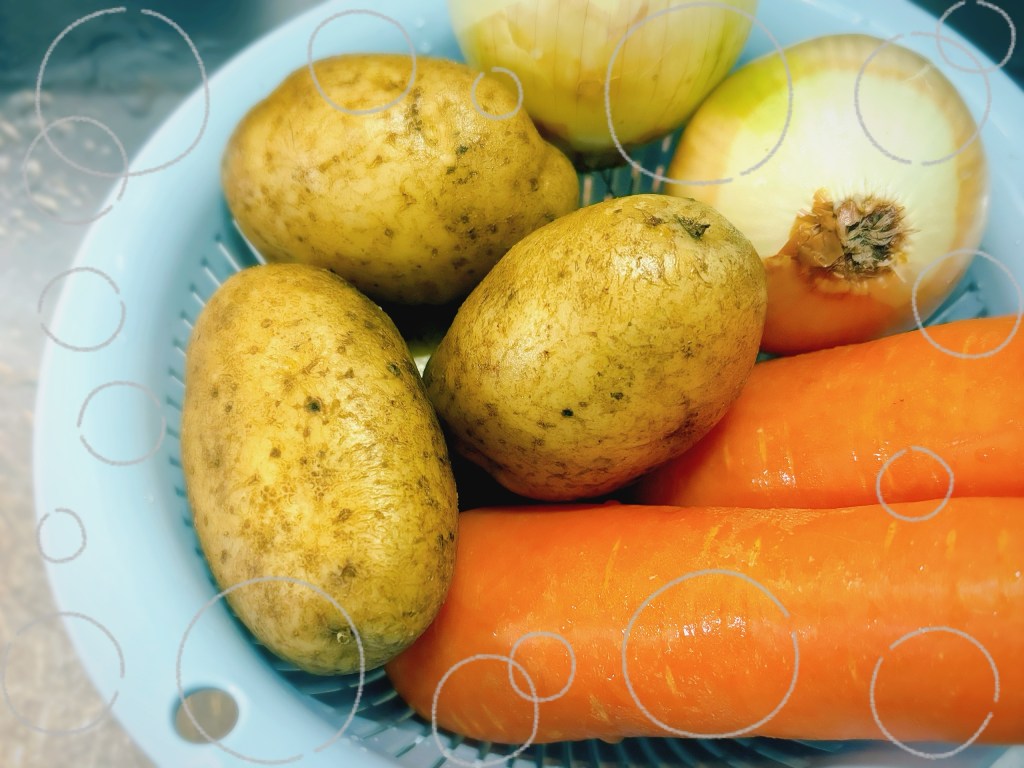
The curry is finished when the vegetables are fully cooked—you can pull some pieces out and let them cool before trying them or you should be able to easily slide a fork in and back out of the carrots and potatoes—and the meat is beginning to flake apart. Turn off the heat.
10. Now let’s turn this plain-ass soup into some thicc curry! Add half of a package of curry roux to the pot, breaking it into pieces first. Stir gently until the roux has melted completely. Return to low heat, and bring back to a simmer, stirring gently for just a minute or two, until the roux has thickened. If the curry isn’t thick enough, add more roux one piece at a time, repeating the above step until it’s to your liking.
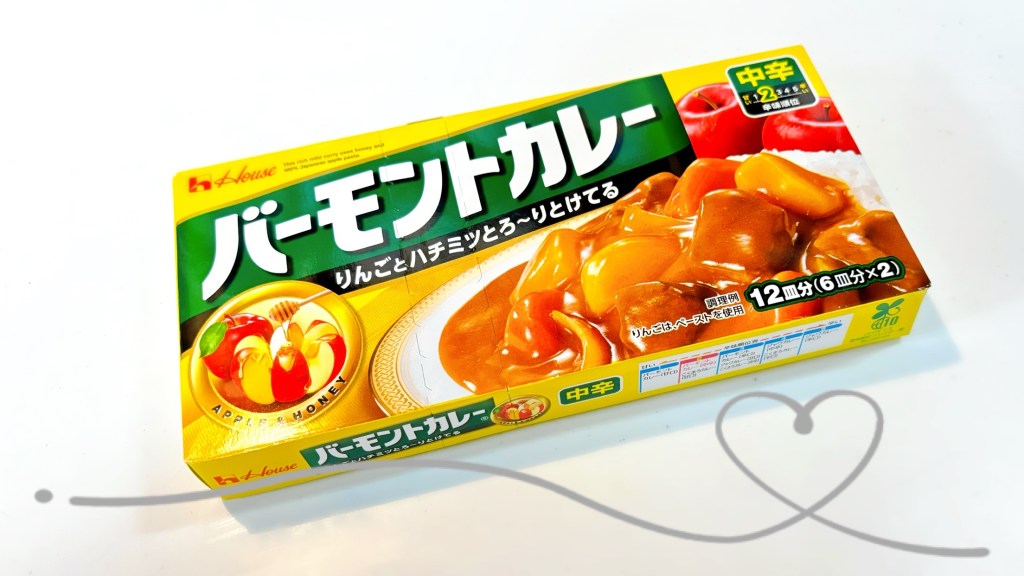
Turn off the heat and put the lid on until you are ready to eat, warming it back up a bit if needed. As I usually spend about half a day making this dish here and there while doing other stuff, I usually have an hour or two until I’m ready to eat it. That’s fine. Just leave it be.
Serve the curry with Japanese rice and some pickled ginger…or my roasted, pickled pineapple. I also recommend a soft-boiled egg, if that’s your thing. It’s really quite transcendent for a meal.
I hope you try this & enjoy it!
Tip: I don’t eat Indian curry with short grain rice, and likewise, I don’t recommend eating Japanese dishes with long grain rice…they just don’t match!
❤︎
Variations: want a vegetarian curry? Omit the meat, sautée the vegetables until they begin to brown, then add the tomato paste to the vegetables before adding the water. Also use vegetable bouillon cubes instead of beef. And while it can be difficult to find a truly vegetarian curry roux, there are a few out there!
Another delicious option is to replace the regular potatoes with sweet potatoes—a favorite of mine in autumn—although the end result can end up a little too sweet for me, so I recommend a spicier curry roux. I think it’s a lovely balance.
Note: I apologize for jumping back and forth between imperial and metric measurements at times! I used metric as much as I could (as it really is simpler than all the avoirdupois fun I have rattling around in my head), but I am still a product of multiple cultures!
* Well, I thought the curry was vegetarian until the day I discovered a chunk of beef in mine, and learned that my Dad was just ladling extra vegetables out of the pot for me, and (attempting to) leave the meat behind. From that day forward, Papa promised not to cheat on vegetarian food anymore…and I promised myself to stay out of the kitchen and not ask too many questions!


 my tokyo kitchen
Leave a reply to Scout Cancel reply